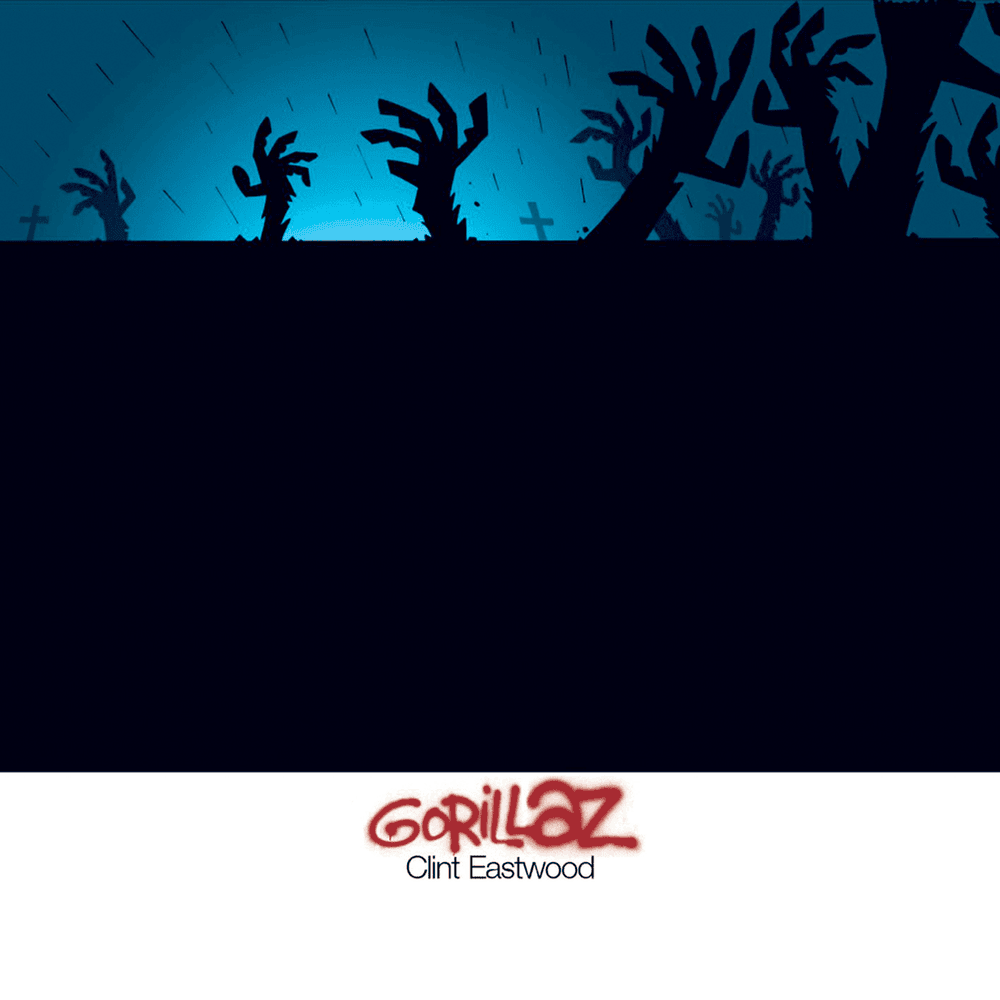
"Sunshine in a Bag": Unpacking Gorillaz's "Clint Eastwood" Lyrics
In 2001, the music world received a jolt from an unexpected source: a virtual band named Gorillaz. Their debut single, "Clint Eastwood," immediately captivated audiences with its distinctive blend of melancholic melody, hip-hop rhythm, and an unforgettable, menacingly mellow beat. More than just a catchy tune, the song became a cultural phenomenon, its animated video a visual feast, and its Clint Eastwood lyrics a subject of enduring fascination and debate. At its core, "Clint Eastwood" is a masterclass in lyrical ambiguity, weaving themes of existentialism, liberation, and the pervasive power of art through the distinct voices of Gorillaz's virtual members.
The track's unique soundscape, combining Damon Albarn's characteristic gloomy vocals with Del the Funky Homosapien's sharp, spectral rap, created a perfect sonic backdrop for its cryptic verses. As we dive into the heart of the Clint Eastwood lyrics, we uncover not just a song, but a complex narrative about identity, perception, and the future of creative expression in an increasingly digital world. Join us as we unpack the layers of meaning hidden within this iconic Gorillaz classic.
Deconstructing the Chorus: "I Ain't Happy, I'm Feeling Glad"
The emotional core of "Clint Eastwood" resides in its iconic, repeated chorus, delivered with an almost resigned sincerity by 2-D:
I ain't happy, I'm feeling glad
I got sunshine in a bag
I'm useless, but not for long
The future is coming on
These lines immediately establish a sense of bittersweet contentment. To be "glad" rather than "happy" suggests a state of acceptance, perhaps even relief, rather than ecstatic joy. It’s a subtle but crucial distinction, hinting at a past struggle or a present understanding of a more nuanced emotional landscape. The phrase "I got sunshine in a bag" is arguably the most enigmatic and discussed line in the entire song. Interpretations range widely:
- Hope and Creativity: It could represent a captured spark of inspiration, a hidden talent, or a personal wellspring of optimism that the narrator carries with them. In the context of Gorillaz, it might symbolize the very essence of their creative process – bottled up and ready to be unleashed.
- Escapism/Substance: For some, it points to a more illicit form of solace or escapism, a temporary fix for underlying unhappiness. The "bag" itself could be a metaphor for containment or a clandestine nature.
- Digital Promise: Considering the band's virtual nature, "sunshine in a bag" could also represent the potential of digital existence, the ability to create light and joy within a virtual, contained space.
The declaration "I'm useless, but not for long / The future is coming on" injects a powerful sense of impending transformation. It speaks to a dormancy, a period of unfulfilled potential that is about to end. This perfectly encapsulates the Gorillaz project itself: a revolutionary concept that was seemingly "useless" to traditional music industry norms but was poised to redefine them. It's a prophetic statement, hinting at the band's meteoric rise and the paradigm shift they would bring, making these Clint Eastwood lyrics strikingly forward-thinking.
The Lyrical Liberation: A Spiritual Hero's Emergence
As the song progresses, the spectral rap of Del the Funky Homosapien (channelled through Russel Hobbs) takes center stage, delivering some of the most intricate and profound Clint Eastwood lyrics:
Finally, someone let me out of my cage
Now time for me is nothing 'cause I'm countin' no age
[...]
Intangible, bet you didn't think, so I command you to
Panoramic view, look, I'll make it all manageable
This verse is often interpreted as the voice of Del's ghost, possessing Russel, or more broadly, the emergence of a powerful, unbound creative entity. The "cage" represents constraint, perhaps the limitations of physical form or conventional thinking. Being "let out" signifies liberation, an artistic and existential freedom where time and age become irrelevant. This resonates deeply with the Gorillaz's virtual identity – characters who exist outside traditional age and physical boundaries, allowing for infinite creative possibilities.
The "intangible" nature of this entity further emphasizes its abstract, yet potent, influence. It can offer a "panoramic view," suggesting an expanded perspective, the ability to see beyond superficialities and make complex realities "manageable." This speaks to the power of art to clarify, simplify, and offer new ways of understanding the world. The rap challenges listeners to question their perceptions, asking "Who you think is really kickin' tunes?" – a meta-commentary on the source of the music and the authenticity of virtual artistry.
The verse then shifts into a more mystical realm:
Picture you getting down in a picture tube
Like you lit the fuse, you think it's fictional? Mystical? Maybe
Spiritual hero who appears in you to clear your view when you're too crazy
Here, the Clint Eastwood lyrics delve into the immersive experience of media and how it shapes our reality. "Picture tube" harks back to old televisions, suggesting a passive consumption that suddenly becomes active and personal ("lit the fuse"). The idea of a "spiritual hero" appearing within oneself to "clear your view" is a profound message about self-discovery and inner guidance. It suggests that the true heroes, the sources of clarity and wisdom, are not external figures but intrinsic forces that emerge when needed most, perhaps even catalyzed by the very music you're listening to.
The Essence, The Fallacy, and Russel's Rhythmic Role
The final rap verse continues this philosophical exploration, dissecting fundamental concepts and the role of the virtual band member, Russel Hobbs:
The essence, the basics, without it, you naked
Allow me to make this childlike in nature
Rhythm, you have it or you don't, that's a fallacy
I'm in them, every sproutin' tree, every child of peace
Every cloud and sea, you see with your eyes
These lines speak to fundamental truths – the "essence" without which one is exposed and vulnerable. The desire to make things "childlike in nature" suggests a return to innocence, simplicity, or fundamental understanding. The statement about rhythm being a fallacy to possess ("Rhythm, you have it or you don't, that's a fallacy, I'm in them") is particularly insightful. It challenges the notion that rhythm is an exclusive talent; instead, it's presented as an omnipresent force, woven into the fabric of existence itself – in nature, in peace, in every element of the world. This universal connection reinforces the idea of music as an inherent, pervasive energy rather than a mere human construct.
Then, the Clint Eastwood lyrics take a darker turn, offering a critique of society:
I see destruction and demise, corruption in disguise
From this fuckin' enterprise, now I'm sucked into your lies
Through Russel, not his muscles, But percussion he provides for me as a guide
This segment reveals a cynical outlook on the modern world, perceiving "destruction and demise" alongside "corruption in disguise" emanating from a pervasive "enterprise" – perhaps a commentary on corporate culture, political systems, or even the music industry itself. The narrator, whether Del's ghost or the overarching creative spirit, feels entangled in these societal falsehoods. Importantly, the connection to Russel Hobbs is clarified: it's not Russel's physical strength ("muscles") but his rhythmic contribution ("percussion") that serves as a conduit and a guide for this spiritual presence. This highlights the crucial, foundational role of the beat and rhythm in Gorillaz's music, embodying a deeper, guiding force.
The verse concludes with a powerful philosophical statement:
Y'all can see me now
'Cause you don't see with your eye, you perceive with your mind
This line serves as a culmination of the themes of perception and the intangible. It asserts that true understanding and connection don't come from mere visual observation but from mental and spiritual perception. It's a direct challenge to the listener to look beyond the surface, beyond the animated characters or the conventional band setup, and truly perceive the message and the artistry with their minds.
The Lasting "Sunshine" of "Clint Eastwood"
Twenty years on, the Clint Eastwood lyrics remain as potent and relevant as ever. Gorillaz's debut single wasn't just a hit song; it was a cultural touchstone that blurred the lines between reality and fiction, music and art, human and virtual. The "sunshine in a bag" metaphor continues to resonate, symbolizing not only hope and creativity but also the very essence of what Gorillaz brought to the table: a contained universe of boundless imagination ready to burst forth.
From the bittersweet gladness of 2-D to the spiritual insights of Del/Russel, the song invites listeners to look inward, challenge perceptions, and embrace the transformative power of rhythm and creativity. It stands as a testament to the idea that true understanding comes from the mind, not just the eyes, and that even in perceived "uselessness," the future is always "coming on." Revisit the Gorillaz's Debut: The Enduring Message of "Clint Eastwood" Lyrics and let its multifaceted meanings continue to inspire and intrigue.